
Enter the Optimiser
Two project-finance banks admit no hybrid solar-plus-storage project in Iberia has yet been lent against. The counterparty that unlocks the money is the one nobody has fully priced.
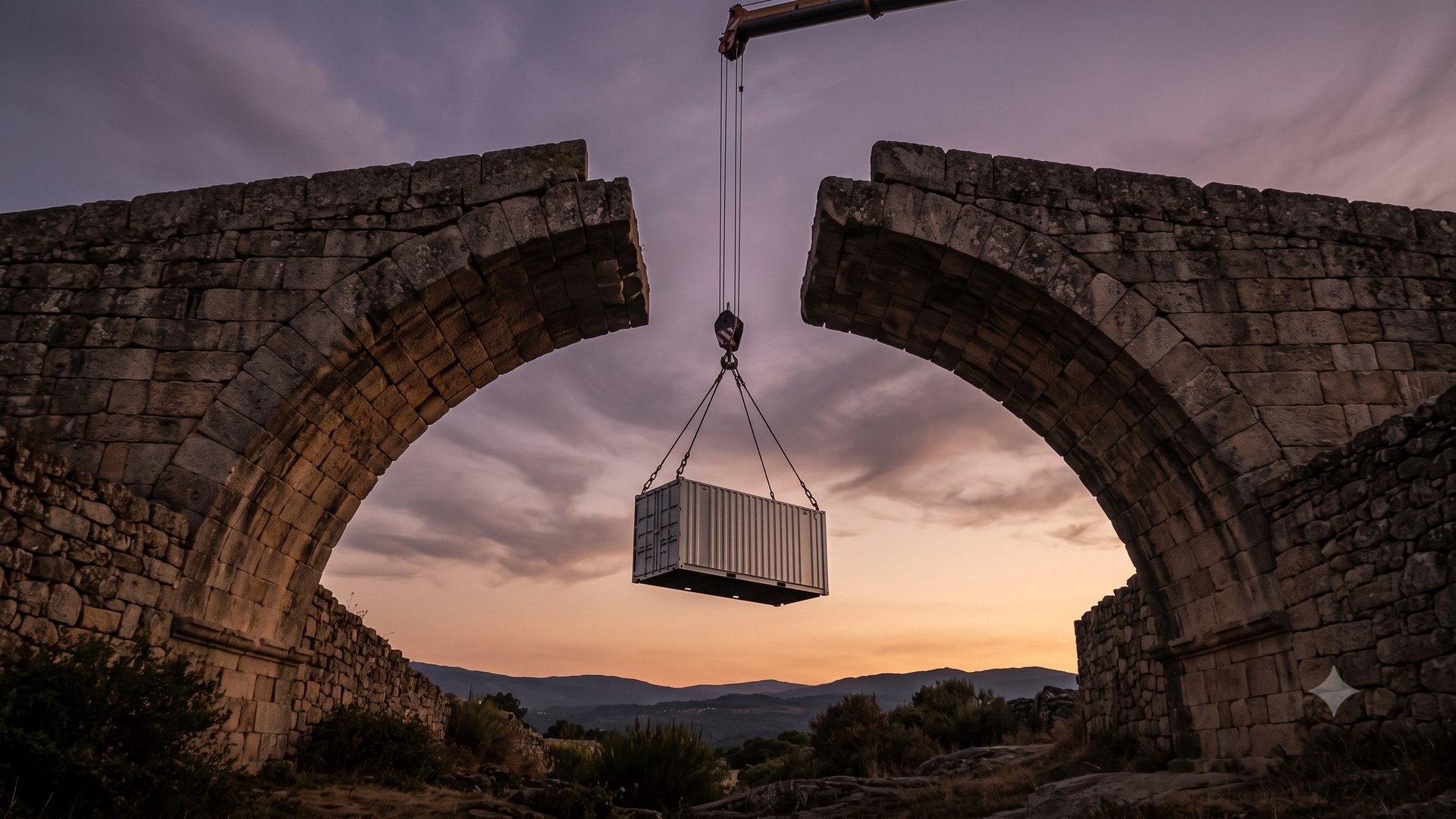
Spain has a curious kind of success problem. So much solar has been built that midday power is close to worthless, and the panels that were supposed to print money now sell their best hours into a market that no longer wants them. The fix everyone agrees on is a battery, bolted to the plant, soaking up the glut at noon and selling it back at dusk. Developers have queued up thousands of megawatts of these hybrid projects. The pipeline is real. The permits are moving.
There is only one snag. The banks that would have to pay for all this have not yet signed a single deal.
That was the quiet confession at the heart of a recent RENMAD webinar, where two of the lenders who bankrolled Spain's solar boom sat down to talk about what comes next. No slides, no spin. Just two men from the project-finance desks admitting, on the record, that the hybrid boom is being talked about far more than it is being funded.
The zero on the balance sheet
Start with the number that matters, which is zero. José Manuel Moreno of Triodos Bank was blunt about where his desk stands. "In Triodos Bank Spain, we have not yet been presented with a single project mature enough, at the ready-to-build stage, which is normally when we start to analyse a financing possibility," he said. His group is not new to batteries; it has more than seven years of experience lending against them in the Netherlands, Belgium and Germany. In Iberia, the count is still nil.
Rubén Martínez of Banco Sabadell told the same story from a much bigger book. His desk has financed more than 200 renewable projects since 2017, some 6 billion euros of debt behind roughly 24 gigawatts of capacity, at a clip of 20 to 25 projects a year. On hybrids the tally is identical to his rival's. "In reality, we still have not had the chance to finance a single project," he said, "because in the market where we operate we do not have projects that have reached ready-to-build." The banks that dominate Spanish renewable lending have, between them, hybridised nothing.
This is not a strike. Both men were at pains to say they are leaning in, sitting with developers, issuing the guarantees that let promoters bid for grid access, trying to work out what a bankable hybrid even looks like. They are collaborating. They are simply not yet lending. And the gap between those two verbs is where the whole story lives.
Why the old playbook doesn't fit
To see why, it helps to understand what made solar so easy to finance in the first place. Over the past decade Spanish banks turned renewable lending into something close to a product. Martínez described the recipe with the fondness of a man who wrote it: a standard framework of contracted revenue at one coverage ratio, merchant exposure at another, a power-purchase agreement of a set length, a maximum leverage figure. "Surely many of those connected to this forum have heard of the famous Banco Sabadell renewables financing framework," he said. "In the end it is standardising a product, and it has been the key to us being able to support the industry by doing 20 or 25 projects a year." Once you have a template, you can lend at scale. You stop analysing each deal from scratch.
The battery breaks the template. Its life is short, perhaps ten years against the thirty of a solar plant, and it shrinks or stretches depending on how hard it is worked. Its revenue is volatile and its cycles vary. Moreno put the technical anxiety plainly: "It is a new technology. Right now the way batteries behave is unknown, and depending on how the battery is operated its useful life can fluctuate a great deal. So, as Rubén said, we will have to go project by project." Martínez reached the same conclusion from the credit side. Some ratios might be standardised, he allowed, "but we do not believe we will be able to have a framework. We think we will move more towards a case-by-case model."
Case by case is the opposite of a boom. It is slow, expensive and does not scale. For an industry that needs to install storage by the gigawatt, that is the problem to solve.
The revenue that pays but cannot be banked
Dig into which risk actually spooks the lenders and you arrive at a paradox. The money in a battery comes largely from the wrong place. Arbitrage in the day-ahead market, buying cheap at noon and selling dear at night, is predictable enough to model. The fat margins, though, sit in ancillary services, the fast balancing that keeps the grid stable. And that is precisely the revenue a bank cannot lend against.
"This is where we see a lot of uncertainty," Martínez said, "but it is where the juiciest part of the business seems to be, the revenue from balancing services. This risk we do not see as bankable. We see it will be an important part of the return." Read that twice. The bulk of the upside is the part the bank refuses to count. A battery that relied on ancillary income to service its debt would be, in a lender's eyes, uninvestable, no matter how attractive the spreadsheet looked. Moreno had watched the danger play out abroad: cannibalisation of those balancing markets, as everyone piled in, came "much faster than initially expected." Spain, he noted drily, has a habit of rushing into a sector all at once. This time the banks intend to be the cautious ones.
So the lenders want the profit stripped out of the loan and handed to somebody else. Which is exactly what happened once before.
The offtaker, reborn
When merchant solar became too risky to fund on its own, the industry invented a fix: the power-purchase agreement, and behind it the offtaker, a creditworthy counterparty who bought the output at a contracted price and swallowed the market risk. The bank lent against the contract, not the weather. That single figure made the solar boom bankable.
Both bankers converged, independently, on the same idea for storage. The new must-have counterparty is the optimiser, and its instrument is the tolling agreement, under which the optimiser, not the project, carries the revenue risk in exchange for running the battery. "Here the optimiser would become the classic offtaker," Moreno said. "For projects to be bankable, initially we will ask that optimisers have considerable financial solvency and considerable experience in energy trading. We see that the one that makes most sense for financing is the tolling agreement, which is basically where the one who assumes the risk is the optimiser."
Martínez built out the role. The optimiser sets the strategy for when to store and when to discharge; it is responsible for squeezing the most out of arbitrage and every other stream; and its tolling contract can be folded into a PPA on a hybrid site, which "may be one of the most bankable solutions we will have, above all on projects that are already built." A third party absorbs the volatile ancillary upside and, crucially, hands the project a contracted floor. That floor is what the bank lends against.
The optimiser, in other words, is being asked to play for batteries the part the offtaker played for solar: the counterparty that turns an unbankable revenue stream into a bankable one. Whoever can credibly supply that contracted floor, at scale and with a balance sheet the banks respect, holds the key to a market thousands of megawatts deep and, for now, entirely unfunded.
What still has to fall into place
None of this arrives clean. The tenor is a headache all by itself. Moreno spelled out the emerging arithmetic: if a battery's useful life is guaranteed at a maximum of around seventeen years, the debt underneath might run twelve to fourteen, and only against a tolling agreement of at least eight years, ideally ten. Hybrids will therefore carry shorter maturities than the long-dated solar loans the market grew used to. The upside is that batteries refurbish cheaply. Unlike conventional repowering, which can cost almost the full capex again, a modest reinvestment "extends the useful life of the battery quite substantially, in both capacity and availability."
Note what the bankers pointedly refused to bank on. The capacity market, that perennial storage hope, remains unregulated, so it stays out of the models. If it comes, Martínez said, it will be welcome but marginal, "scarcely reaching 10 or 15 percent of the project's total revenue." Capital subsidies help the equity holder recover faster but do nothing for the long-term risk. Standalone batteries, stripped of a host plant, still face the full brunt of market risk and will wait longest of all. The path in runs through hybrids, through solar plants that need a battery to cure their own price-capture wound, with an optimiser standing where the offtaker used to stand.
The floor beneath the boom
The honest headline from this webinar is that the hybrid revolution in Spain is, financially, still on the drawing board. But listen past the caution and there is an opening in it. The banks are not saying no. They are saying they will fund these projects the moment the risk is wrapped. "The financial sector in Spain is very interested in financing this type of project," Martínez said, "and as soon as we are able to obtain a business model that mitigates the risks well, above all the market risk that worries us so much, we are going to finance them." Moreno, insisting batteries are "part of the solution," was the more emphatic of the two.
The lesson of the last decade is that whoever supplies the missing contract owns the market that follows. For solar it was the offtaker. For batteries it is the optimiser. The floor beneath the hybrid boom has a name now. The only question is who gets to pour it.
The full conversation, including the audience questions on standalone batteries, wind hybridisation and energy communities, is available to watch on demand. Rubén Martínez and José Manuel Moreno both return to the stage in person at RENMAD Invest in Madrid on 27 January, alongside investment funds and other financiers ready to talk about how these projects finally get built.
You reached this analysis because ATA Insights puts independent energy-transition intelligence in front of 86,000+ professionals across the sector. That's exactly what we do for funded projects, events and companies — turn your work into reach.
See how we disseminate work like this →Where this analysis came from
This piece draws on the ATA Insights / RENMAD webinar Financing hybrid solar-plus-storage. Watch the full session on demand.

The energy transition, in your inbox
Join 86,000+ professionals reading our independent briefings across five sectors.