
The Bottleneck Is the Plug, Not the Building
Spain has the land, the sun, the sea-cables and some of Europe's cheapest clean power. Whether it becomes the continent's next data-centre hub now turns on a duller question: can it get the things connected to the grid?
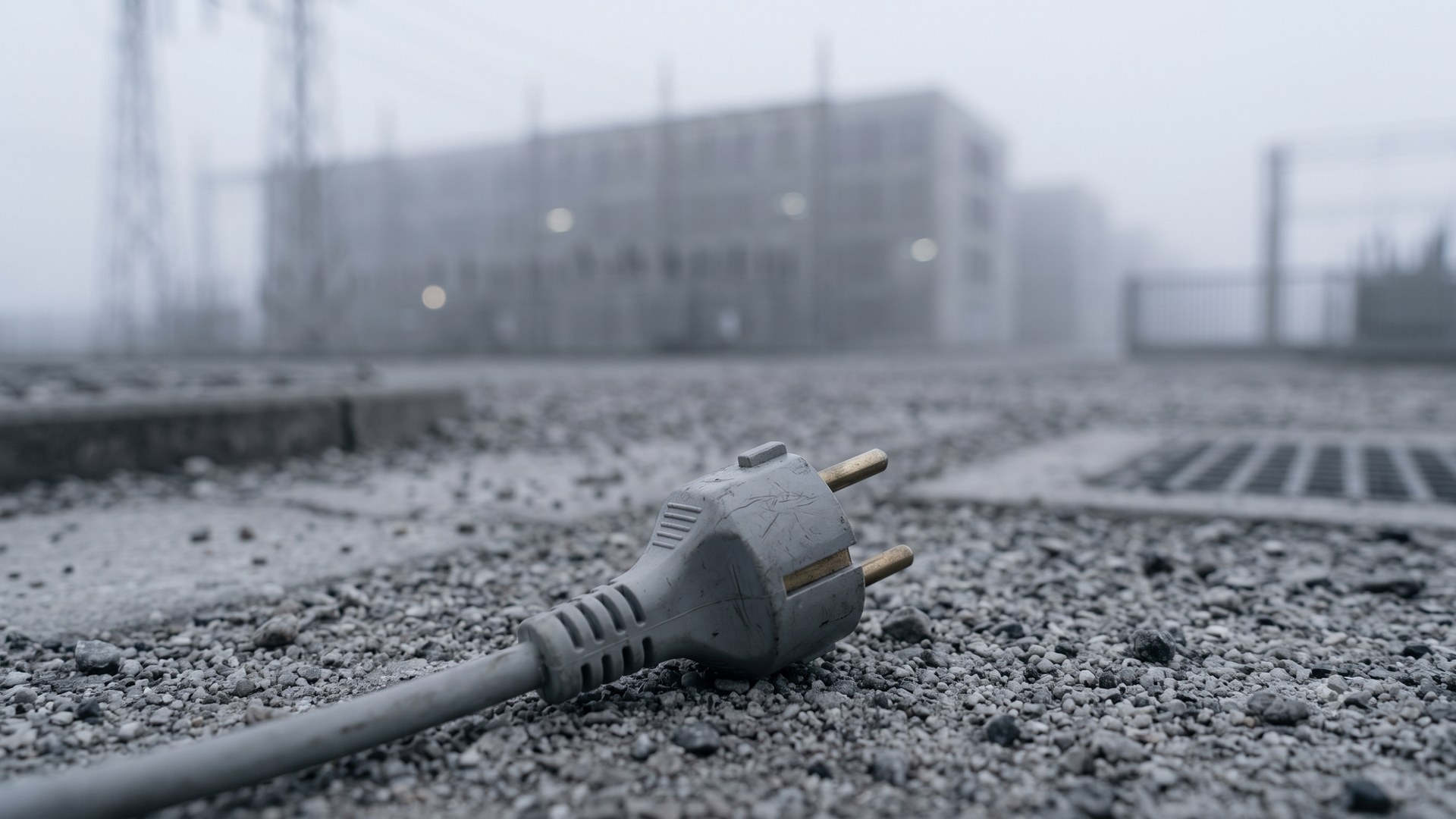
A one-year wait to double a plug
Zigor Gaubeca has a small, unglamorous story that explains Spain's data-centre boom better than any gigawatt forecast. His company, Grupo Aire, wanted to expand one of its Madrid sites from two megawatts to four. Not build a hyperscale campus, not requisition a substation — just double a modest connection in the capital that already draws more data-centre investment than anywhere else in the country.
"We spent a year on permits," he told an ATA Insights webinar, part of the run-up to RENMAD Datacenters in Zaragoza. "With the utility it isn't so simple." A year. To add two megawatts. In the city that holds, by most counts, more than half of Spain's connected data-centre capacity.
That anecdote is the whole argument in miniature. The received wisdom is that Spain's rise as a data-centre location is a story about land, sunshine and cheap electricity. It is not. The land is available, the sun is free and the power is genuinely cheap. The constraint that decides whether the servers actually get built is narrower and more stubborn: the point where the building meets the grid. The bottleneck is the plug, not the building.
The cocktail is real
To be clear about what Spain has going for it — because the list is long, and it is why every hyperscaler now has a Spanish spreadsheet open.
David Rodríguez Villanueva, who leads the energy practice at Strategy&, laid out the ingredients. Spain sits inside what the industry calls the "Tier 1" club only at its edge; the mature European market is still the old FLAP-D quartet — Frankfurt, London, Amsterdam, Paris, plus Dublin — where data centres have clustered for two decades. But those markets are increasingly full, expensive and, in Dublin's case, effectively closed to new grid connections. That is where the emerging markets come in, and Spain has an unusually strong hand.
It has, Rodríguez noted, deep and liquid fibre connectivity, attractive prices relative to its neighbours, and — the ingredient everyone fixates on — an electricity mix that is "increasingly decarbonised." For an industry now judged as much on the carbon of its kilowatt-hours as on its uptime, cheap renewable power is not a nice-to-have. It is the product.
Then there is the sea. Roughly 95% of the world's internet traffic moves through submarine cables, and Zigor Gaubeca's business is built on the points where those cables come ashore. His network, he explained, exists to stitch together cable landing stations, data centres and content — controlling distance and controlling routes, "the only way" to guarantee the latency that modern applications demand.
Here the geography does Spain a quiet favour. "Since Brexit," Gaubeca said, "there was a paradigm shift, where Spain and Portugal started to become a great communications hub." Cables that once made naturally for Britain increasingly land on the Iberian Atlantic coast instead, and the data-centre construction has followed the fibre. It is a real advantage — and worth stating plainly that it is a secondary one. Cables bring the traffic. They do not, on their own, energise a single rack.
Two worlds, not one market
One of the more useful things to come out of the session was a refusal to talk about "the data-centre market" as a single thing. "There are two worlds," Gaubeca said, and confusing them is how forecasts go wrong: "the hyperscaler, and the rest."
The hyperscale world is the one that makes headlines — the vast AI-training campuses whose appetite for power is close to bottomless. For those, location is almost incidental. "Training the models," Gaubeca said, "we don't really care where it is." What matters is energy that is accessible and cheap, and somewhere cold enough to make cooling affordable. The new GPUs are the reason: his customers now ask for racks drawing 100, 160, even 200 kilowatts each, densities that would have sounded absurd a few years ago and that turn a data hall into something closer to a foundry.
The other world is the one Grupo Aire actually plays in, and it explains why the map will not simply consolidate into a handful of giant sites. This is the world of inference and Edge — smaller facilities, three or four megawatts and often less, whose job is to sit close to the user. Because once a model is trained, someone has to use it, and interactivity is unforgiving. Augmented reality, live systems, anything that has to feel instant, all push the computation back towards the people consuming it.
The physics here is refreshingly concrete, and Gaubeca did the arithmetic on the spot when an attendee asked how far a data centre can sit from its users. Light travels about 200,000 kilometres per second through fibre — slower than through a vacuum, because glass is a medium — which works out to roughly 100 kilometres of cable per millisecond of delay. Many interactive applications need round-trip latency under about 20 milliseconds; the more demanding ones are now converging on 5. That is why Madrid has worked so well as a single site: it sits within 20 to 30 milliseconds of most Spanish users. And it is why, as applications tighten their latency budgets, the industry is being pushed to spread out — to put compute nearer to where the content is consumed rather than piping everything back to one glittering campus.
The part the map leaves out
So far, so bullish. Cheap clean power, cable landings, a two-tier market with room for both giants and Edge. If data centres were built on advantages, Spain would already have won.
They are built on connections, and this is where the cocktail curdles. Rodríguez was blunt about the choke point. All the favourable ingredients, he argued, run into "the restrictions on electricity interconnection" — the difficulty of actually plugging these facilities into the grid. Operators are not short of interest; they are scrambling to secure positions and buy visibility years ahead, precisely because the scarce resource is not appetite or capital but a firm, timely connection in the right place.
The open-web evidence backs the panellists rather than the brochures. By recent counts, more than eight in ten of Spain's grid connection points are running at full capacity. Madrid — the crown jewel, in Gaubeca's phrase, and by far the fastest-growing node over the past decade — holds more than half the country's capacity while new large connections there can wait a year and a half or more. The competition for access, Gaubeca said, is "extremely high," and it is "the biggest handicap we are seeing."
Gaubeca put his finger on the structural gap, and it is the one that should worry policymakers most. "There is no energy plan," he said. Getting land is straightforward; getting the town hall to permit a building is straightforward. Securing the power is not — and there has been no master plan capable of hosting all these projects at once. He was careful to add the hopeful clause: "it does seem the government is now moving on this." That is fair. Spain's 2025–2030 electricity grid development plan is being finalised as this is written, with a slice of new capacity earmarked specifically for data centres, and the grid operator began publishing demand-access capacity in 2026 so that large loads can see where the room actually is. But the plan is being written now, after a decade of construction that has already crowded into the few well-connected regions. The scarcity came first; the map is arriving late.
What the operators actually do about it
Faced with a grid that says "not yet," the industry does what industries do: it engineers around the constraint and gets cleverer about the constraint it cannot engineer away.
Some of that cleverness is on the power side. Batteries, once prohibitively expensive as a way to store energy, have fallen in cost to the point where they are doing more than backup. A ten-year cycle of daily charge and discharge, Gaubeca noted, lets an operator load up when power is cheapest, or bank on-site solar generation for the night — turning the data centre from a passive drain into something that can shape its own demand. He was refreshingly unsentimental about the hardware itself: batteries are consumables, nobody gambles on squeezing extra years out of a recycled cell, and reclaimed lead or lithium never quite matches the virgin material's characteristics.
More of the cleverness is in software. Grupo Aire, Gaubeca said, ingests on the order of 150,000 alerts or logs per second across its networks and data centres — a volume no human night shift can triage. The value of AI here is not the headline-grabbing kind; it is the unglamorous work of separating what matters from what does not, spotting problems before they become outages, and turning operations from reactive to proactive. "We used to have machine-learning algorithms that flagged something anomalous," he said, "but you couldn't really do anything about it." Now the whole stack — network, facility, applications — can be watched and acted on from what he called a single brain, which also flattens the learning curve for staff working across a sprawling technology stack.
And some of it is simply speed. The building, it turns out, is the easy part. Modular data centres can be assembled fast; the design is fitted to the customer, and a hyperscaler wanting extreme rack densities gets a very different retrofit from a regional client. But construction only starts, Gaubeca noted, once the power is secured — often ten megawatts already in hand before the first module lands. The plug comes first. Everything else is quick.
What decides the next decade
Spain's pitch to be Europe's next data-centre hub is not hype. The demand is real, the fibre is real, the clean power is real, and the Atlantic cables landing on Iberian shores are a genuine, if secondary, gift. Rodríguez sees the sceptic's case only in the froth — "some projects that are excessively ambitious" — not in the underlying thesis.
But a hub is not a collection of advantages. It is a collection of connected buildings. Spain has spent a decade proving it can attract the investment and pour the concrete; the question that decides the next decade is whether it can energise what it builds fast enough to keep the investment from drifting to whichever market clears its queue first. The land is ready. The sun is ready. The cables are ashore. The only thing standing between Spain and the top table is the plug — and, at last, a plan to make more of them.
The full webinar, "España, ¿próximo hub europeo de Data Centers?", is available to watch on demand. For the deeper conversation on power, permitting and the grid, the panellists reconvene in person at RENMAD Datacenters in Zaragoza.
You reached this analysis because ATA Insights puts independent energy-transition intelligence in front of 86,000+ professionals across the sector. That's exactly what we do for funded projects, events and companies — turn your work into reach.
See how we disseminate work like this →Where this analysis came from
This piece draws on the ATA Insights / RENMAD webinar Spain: Europe's next DC hub?. Watch the full session on demand.

The energy transition, in your inbox
Join 86,000+ professionals reading our independent briefings across five sectors.