
The PPA is No Longer Optional
Banks have stopped bankrolling merchant renewables, and the humble power-purchase agreement is quietly becoming the instrument that decides which projects get built.
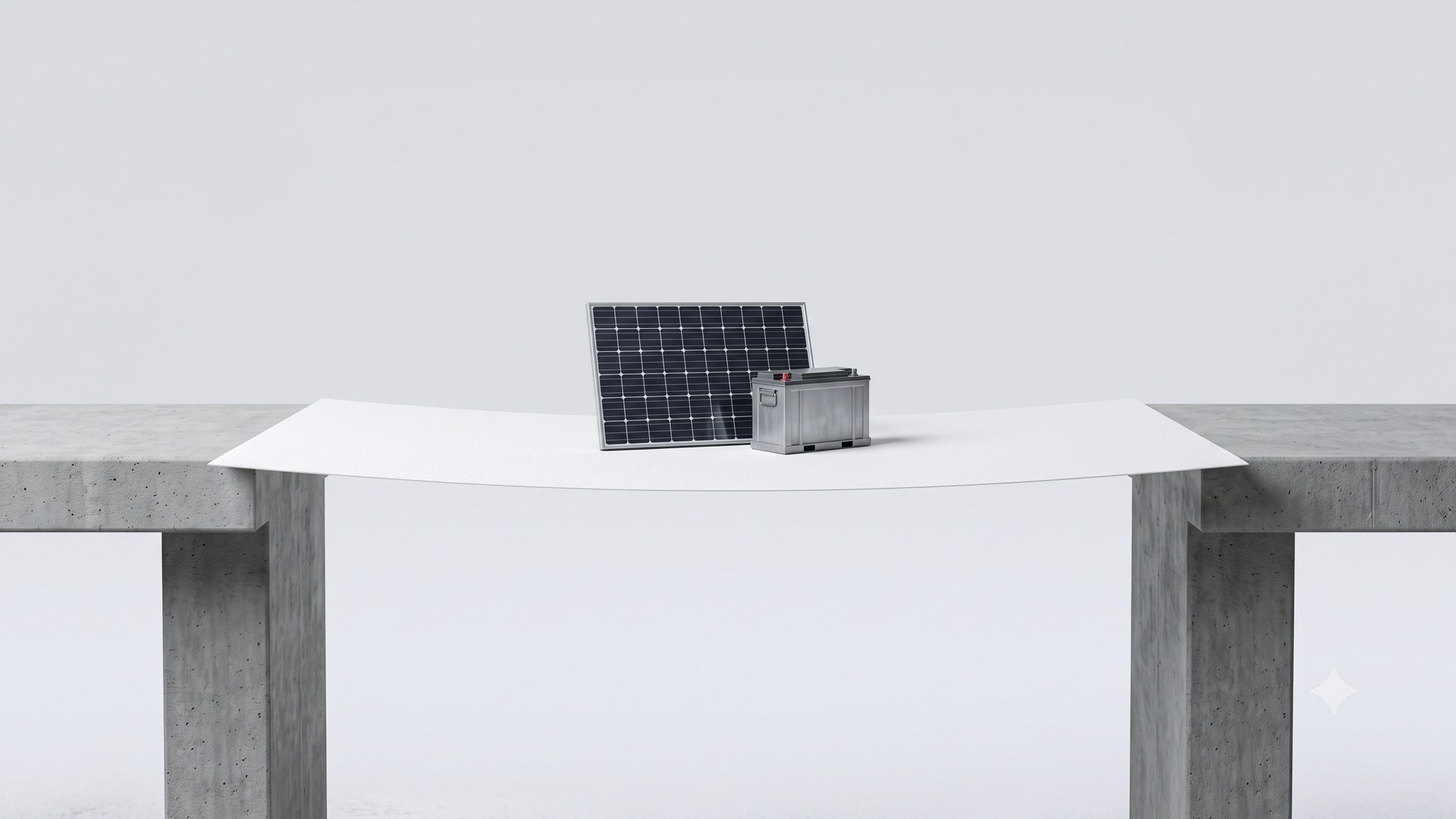
Spain crossed a line this year that few noticed at the time. By the end of August, the wholesale market had racked up 503 hours of negative electricity prices, almost all of them in the middle of sunny days, when the country's solar fleet is at full tilt. Two years earlier, negative prices were a curiosity. Now they are a design constraint. And they have turned a contract that developers once treated as a nice-to-have into the thing that decides whether a project gets financed at all.
That was the backdrop to a RENMAD Invest webinar on how to make Spanish renewable projects bankable, where three people who sit on different sides of the same table — a financial adviser, an asset manager, and a developer's head of origination — walked through what has changed. The short version: the power-purchase agreement, or PPA, has stopped being a way to squeeze out a better return. It is now the price of admission to debt.
From nice-to-have to must-have
Manuel de Castro Zurita, managing partner at Blacksalt Asset Management, has watched the Spanish PPA market grow up. Bilateral contracts have always existed, he said, but the market as we know it took off around 2018, when subsidy schemes wound down and renewables became competitive enough to stand on their own. Corporate buyers overtook utilities as the biggest signers. Volumes climbed year after year.
Then the lenders changed their minds. "For something over a year now, the banks have started to turn off the tap on financing purely merchant projects," de Castro said. "In 2025 it has almost become a must, an obligation. Whoever has a renewable asset, if they want to leverage it, has to have a PPA." That single shift — from banks tolerating merchant risk to refusing it — is what pushes everything else. A developer who wants debt needs a contracted revenue stream, and the only reliable way to get one is a long-dated PPA with a creditworthy buyer.
Spain sits at the centre of this. It has been Europe's biggest PPA market for years, taking roughly 30% of the continent's volume, largely because its solar is so cheap. But cheap cuts both ways. Solar has more than half the market by volume, and its PPA prices keep sliding, to the point where a photovoltaic project on its own often can't clear a price that pays back its capital. The buyer, for now, holds the pen. "We're in a market with an oversupply," de Castro said, "so basically the offtakers set the conditions." In 2021 and 2022 it was the other way round. The pendulum has swung hard.
The fight over negative hours
The live argument in today's negotiations is not about the headline price. It is about what happens during those hours when the market price falls below zero.
Because Spanish solar plants have no reason to keep producing when they are paying to export, most of them switch off. That is why Spain racks up so many negative hours yet a shallow average negative price — around minus two euros a megawatt-hour so far in 2025, far milder than France or Germany, where subsidised plants keep generating regardless. So the question becomes: who eats the negative hours in a PPA?
Offtakers, sensing their leverage, have been pushing a clause that says the contract simply doesn't settle when prices go negative — "no settlement below zero." It sounds harmless. It is not, said de Castro, at least not for the generator. "If we'd had this clause on a photovoltaic plant this year, there would have been 503 hours, because all the negative-price hours happened during solar hours — 20 to 30% of the highest-production hours. The PPA wouldn't have settled, and so my captured price would have ended up much lower than the theoretical PPA price." His advice for Spain is the opposite: negotiate a market floor at zero, so negative hours settle as if the price were zero, rather than not settling at all.
Carlos Alonso Merino, head of customer origination in Spain for Zelestra, sees the same clause from the developer's chair and reaches the same verdict — for a sharper reason. Everything a developer does is aimed at reassuring the bank. "Those clauses where the offtaker isn't obliged to settle in negative-price scenarios don't work in favour of the robustness the lender is looking for," he said. "In our opinion and from our experience, we believe those clauses are not bankable." He calls negative prices "the elephant in the room we never wanted to talk about." For Zelestra, settling even through negative hours is close to a mandate: without it, the project finance doesn't close, and if the project finance doesn't close, there is no project.
This is the paradox at the heart of the negative-price clause. The offtaker wins the clause in the negotiating room and weakens the very contract it is relying on to get the plant built.
Don't trust the backtest
If there is one warning from the webinar that deserves to be pinned above every investment committee's desk, it came from Vicente Jorro, founding partner at Agere Energy Infrastructure Partners and, by his own cheerful admission, the most experienced man on the panel. His subject was batteries, and the trap of sizing one by looking backwards.
He walked through a real photovoltaic project in Andalucía. On 2024 history, a two-hour battery bolted onto that plant would have captured about 62 euros a megawatt-hour over the year, against a 42-euro average capture for Spanish solar — a 20-euro improvement. A four-hour battery would have captured around 75. Run the same historical exercise across different configurations and two hours looked like the sweet spot, comfortably ahead of four.
Then he pulled the rug out. "What's the risk of doing it in such a simplistic way, using only historical data and not future projections?" he asked. "You can arrive at a wrong conclusion. If we did this study with forward prices, the conclusion would probably have been completely different — it would most likely be telling us to install at least four hours." A backtest tells you what would have been optimal for a world that has already happened. The battery has to earn its keep in the world that is coming, where the price curve is steeper and the arbitrage windows are wider. "It's important to do a very serious study here and not try to do something too simplistic," he said. "It's too dangerous."
That gap between the rear-view mirror and the windscreen is exactly what makes storage hard to finance. As Jorro put it, when you leverage a standalone battery, "what we're selling isn't a revenue price, it's volatility — and for a classic financier, that makes their brain explode." Which is why the first bankable battery deals in Spain are likely to arrive dressed as tolling agreements: the developer sells the volatility to a trader, and hands the bank a fixed price it can actually put in front of a risk committee.
Exotic curves and the search for the winning product
With plain solar PPAs squeezed and plain batteries hard to bank, the market is improvising. The old menu had two shapes — a solar-hours profile or a baseload — and buyers picked one. Now, de Castro said, storage is opening up "semi-baseload, top-bottom, an infinite number of alternatives," though offtakers are still circling the novelty warily. Contracts are getting more inventive at the same time as they get harder to price.
Two structural forces frame all of it. Guarantees of origin — the certificates that let a buyer claim green power — have become a driver in their own right, not just a financial footnote. And additionality bites from 2027: buyers increasingly want projects that couldn't have been built without their signature, which is pushing PPA start dates out beyond that year.
Alonso Merino is honest that nobody has cracked the format yet. Zelestra has already signed its first battery PPA, on a plant in the south-west of the peninsula, and its first hybrid solar-plus-storage deal. But the ideal contract is still out there. "We still haven't found the winning product among us all," he said. "The market's own evolution will lead us to a winning product that the offtaker feels comfortable with and understands — because it's also a very complex product — and that the developer feels comfortable financing." Fixed hybrid curves, night-shifted profiles covering the spread, ad-hoc discounts across bands of negative prices: the industry is trying everything, waiting to see what sticks.
The bankability instrument
Step back and the arc is clear. A decade ago the PPA was a lever for a slightly better return. Today it is the load-bearing beam of the whole financing — the document a lender reads first, the clause a negotiation lives or dies on, the reason a battery gets built or shelved. It has acquired floors and caps, buyer-fraction thresholds north of 70-75%, investment-grade counterparties, termination penalties, guarantees of origin, and an argument over negative hours that has become a proxy for the balance of power in the market. None of that existed in the early, simpler contracts. All of it exists because the contract now has to do the job the merchant market used to do on its own.
The opportunity, for anyone paying attention, is that the instrument is still being invented. Whoever designs the curve that a nervous offtaker understands and a nervous banker can leverage will own the next phase of Spain's energy build-out. The winning product is not here yet. But the market that needs it is very large, and it is not going to wait.
The PPA used to be the thing you added to sweeten a deal. Now it is the deal.
The full webinar is available to watch on demand from ATA Insights, and the conversation continues in person at RENMAD Invest, Madrid, on 27 January.
You reached this analysis because ATA Insights puts independent energy-transition intelligence in front of 86,000+ professionals across the sector. That's exactly what we do for funded projects, events and companies — turn your work into reach.
See how we disseminate work like this →Where this analysis came from
This piece draws on the ATA Insights / RENMAD webinar PPAs and bankability in Spain. Watch the full session on demand.
The energy transition, in your inbox
Join 86,000+ professionals reading our independent briefings across five sectors.