
From Importer to Exporter: Spain's Ammonia Swing
Renewable ammonia could turn Spain's sunshine into fuel for northern Europe's ships — if demand signals, not just engines, show up.
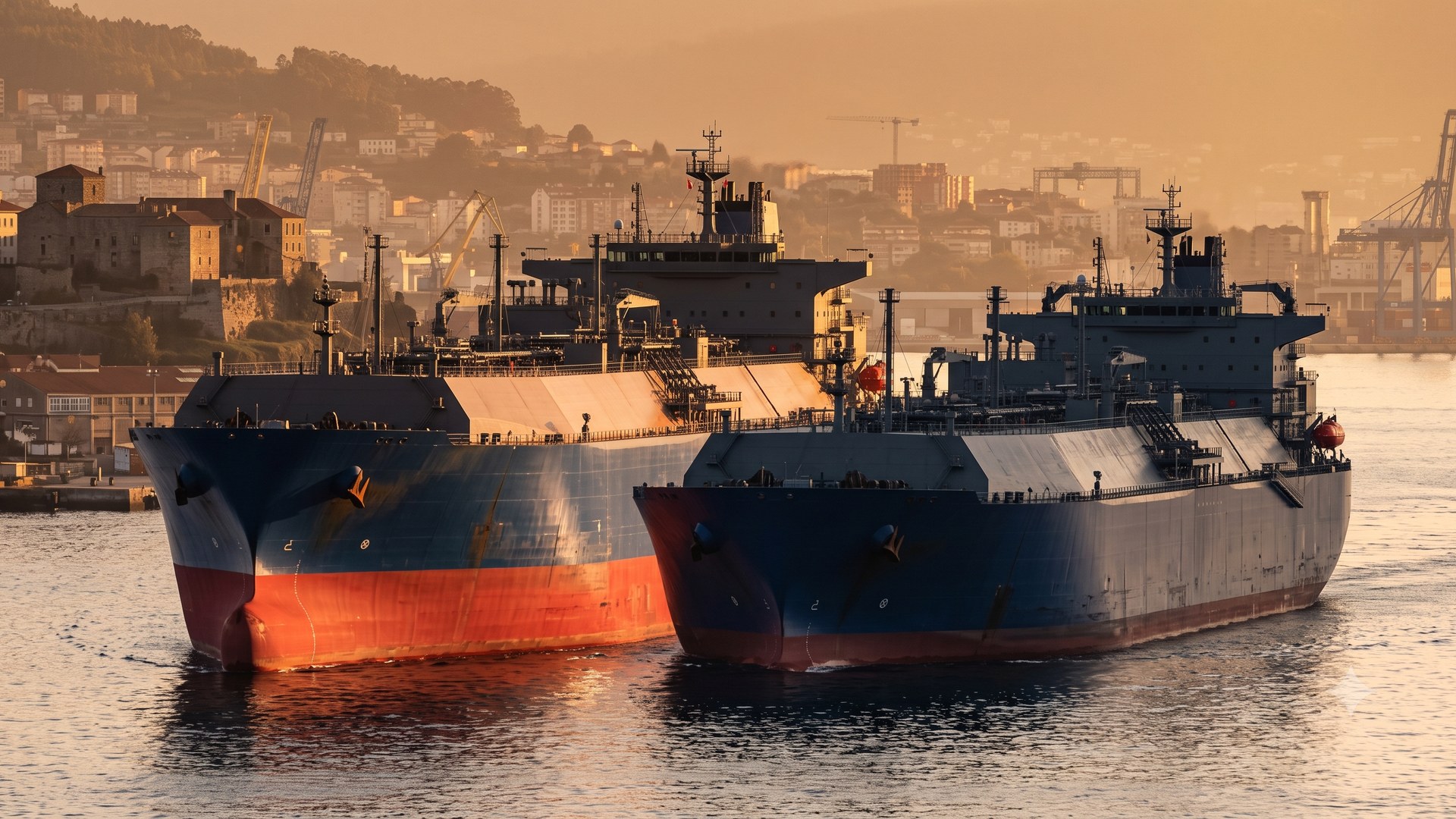
In June, gas prices jumped again as missiles flew over the Gulf. Shipowners who burn fossil fuel for a living felt it at the bunker pump. It was a small reminder of an old vulnerability: the marine fuel business runs on hydrocarbons piped or shipped from places that occasionally go up in flames. For a country like Spain — long an energy importer, now sitting on more sun and wind than it can use — that volatility looks less like a threat than an opening.
The opening has a name that smells of cleaning products: ammonia. At a RENMAD webinar run by ATA Insights, three people who finance it, lobby for it and build engines to burn it laid out why a 120-year-old fertiliser chemical is being talked about as a fuel for the world's ships — and why the talk is running ahead of the orders.
The unglamorous giant
Start with the scale, because it is the part most people miss. Ammonia is not a startup molecule. It is the second most-produced commodity chemical on the planet, after sulphuric acid.
"More than 180 million tonnes a year are produced and consumed," said José Ramón Freire, director general of the Spanish Renewable Ammonia Association. "With a logistics network that is, logically, very consolidated — more than 120 ports that store it, decant it and transport it."
That last point is the quiet advantage. The world already moves ammonia at room temperature and modest pressure, which is exactly what hydrogen cannot do without enormous cost. Freire's pitch is that the same molecule that fed the twentieth century — by fixing nitrogen and, in his words, ending hunger except in times of conflict — can carry renewable hydrogen to market in the twenty-first. The pipes, tanks and trained hands are mostly already there.
The catch is colour. Today's 180 million tonnes are almost all "grey," made from natural gas. Green ammonia, made from renewable hydrogen, still costs three to four times as much. As demand for fertiliser grows and new energy uses appear, the International Energy Agency expects total ammonia demand to climb from today's level toward 600 million tonnes by 2050 — a market large enough to be worth decarbonising, and expensive enough to need help doing it.
Who pays for the colour
That help is where Rita Ferreira comes in. She is a senior sustainable-finance analyst at S&P Global Ratings, the part of the firm that issues second-party opinions on green bonds rather than credit scores.
Her team grades activities on a scale it calls "shades of green," and ammonia maps neatly onto it. "Dark green would be ammonia produced using renewable energy or electricity — from green hydrogen," Ferreira said. "In our opinion, this is the type of production that is already most aligned with a trajectory compatible with a low-carbon future." Nuclear-powered ammonia lands a shade lighter; blue ammonia, made from gas with carbon capture, lighter still; grey ammonia falls off the green scale entirely.
The interesting finding is what happens when she points the scale at the shipping companies themselves. In a report published in January, S&P assessed a group of maritime firms. "The result is that most of the companies would be orange," she said — early in the transition, not yet green. A third already use biofuels or alternative fuels, but on so few vessels that it barely moves their overall score. Green finance, she argued, is the lever that can "unlock this investment in clean fuels and technologies, including green ammonia," because the molecule is easier to ship across oceans than hydrogen — just dearer.
The engine is ready; the rulebook is late
If finance is the carrot, the engine is the proof that the carrot is worth chasing. Jesús Puelles handles marine sales for Iberia and Africa at Wärtsilä, the Finnish technology group whose kit, he noted, sits on roughly one ship in three worldwide.
Wärtsilä has been here before, with methanol. "We delivered the first methanol engine almost ten years ago, and now we have around 300 engines delivered worldwide," Puelles said. Ammonia tells a different story. "Although it started very strongly on the decarbonisation path, it has fallen quite far behind. We only have one engine, ready for sale since 2023, that we delivered in 2024." One ammonia engine against three hundred methanol ones — the gap is not metal, it is demand.
The metal, in fact, is close to sorted. Puelles said a new engine can switch between fuels while keeping 95% of its parts, and that the company had "just announced we'd raised the ammonia engine's power by 25%" to match its dual-fuel gas engine. Ammonia burns about 90% cleaner than diesel on greenhouse gases. Its handicaps are real but known: high toxicity, lower energy density, and the need for after-treatment to scrub the nitrous oxide — laughing gas — that ammonia combustion can throw off, a greenhouse gas some 300 times more potent than CO2.
The genuine drag is the rulebook. The International Maritime Organization's global fuel rules, expected last October, "were postponed by a year," Puelles said, and the body reconvenes in London to try again. The delay matters because it leaves Europe's regime and the rest of the world out of step — a mismatch already nudging cargo and emissions around. He described traffic shifting "from Africa to Algeciras, or from Morocco to Algeciras — a few kilometres, but at the tax level it shows," and some maritime freight slipping onto roads to dodge shipping's carbon costs. Since October, he said, decarbonisation enquiries have cooled; what owners actually buy short-term is biofuel and natural gas.
The flexible trap
This is where the sober reading lives. FuelEU Maritime, the European rule now in force, sets a binding path of falling emissions and does it, as Freire put it, "from a perspective of technological neutrality." That sounds friendly to ammonia. The problem is that neutrality plus flexibility lets owners comply the cheap way.
"The framework incentivises decarbonisation," Freire said, "but it does not clearly direct investment toward fuels like renewable ammonia." Compliance over the next few years is achievable with biofuels, bio-LNG and efficiency measures, no fuel revolution required. The hard quotas that would actually pull renewable fuels of non-biological origin into ships — the RFNBO sub-targets — arrive late and soft: a 1% requirement around 2031, not biting in earnest until 2034. The stick is mostly a future stick.
Puelles put the owner's arithmetic plainly. "Right now there's a lot of stick but I'm not seeing much carrot," he said. Owners pay heavy emissions costs today but see little coming back to fund the switch. "From 2031, 2032 we'll see it pays off" — and that, eventually, creates scale. Until then, letters of intent pile up while firm contracts do not. "A lot of intent, a lot of enquiries," he said, "but nothing sustainable with a contract."
Why Spain holds the better hand
Set the caution against geography and the case sharpens. Spain has more renewable electricity than it can absorb, and a coast lined with ports that already handle ammonia — as importers.
Freire's vision is a reversal. Spain "could go from being a net importer of ammonia, from those grey-ammonia producing countries, those natural-gas producing countries, to a net exporter of renewable ammonia to the countries of northern Europe that don't have the luck of so much renewable potential." Sun-short Rotterdam buys what sun-rich Algeciras, Huelva, Tarragona or Cartagena could make. The same hubs that take grey ammonia in could send green ammonia out, helping decarbonise northern industry, fertiliser and shipping at once.
The ports are the equilibrium point in more ways than one. Asked whether green hydrogen plants should feed small distributed ammonia units or large central ones, Freire reached for a balance: don't over-concentrate, don't over-scatter. "Ports could be very attractive sites" for plants that get cheap storage and easy transport built in. And the first ammonia ships, he reckoned, will look a lot like the first gas ones — chemical tankers and ammonia carriers crewed by people who already know how to handle the cargo, before the technology spreads to general merchant ships and ferries.
There is even a domestic flywheel that has nothing to do with ships. Fertiliser is more than 30% of farming's carbon footprint, Freire noted, and decarbonising it with green ammonia is more efficient "than changing a load of tractors." Rising green-fertiliser quotas could build the renewable-ammonia supply and the storage hubs first — and marine fuel rides in on that scale.
The sober kicker
None of the three pretended the swing is near. Ferreira's five-year forecast is deliberately flat: "some isolated advances, but not transformational ones." Most of shipping stays orange, with efficiency, not new fuel, doing the early work. Freire expects pilots and demonstrators, not fleets. Puelles expects biofuel and gas to dominate the near term while the IMO argues in London.
But notice what they did not disagree about. The engine works. The molecule already moves through 120 ports. The sun is free and, for now, going to waste. What is missing is not invention but a price signal strong enough to make a shipowner sign. Wärtsilä waited a decade for methanol to find its buyers; ammonia may wait too. Spain's advantage is that, unlike the gas it imports, the wind off its coast does not get more expensive when someone fires a missile. The country has spent a century buying energy. The question this webinar left open is how long it will wait before it starts selling it.
You reached this analysis because ATA Insights puts independent energy-transition intelligence in front of 86,000+ professionals across the sector. That's exactly what we do for funded projects, events and companies — turn your work into reach.
See how we disseminate work like this →Where this analysis came from
This piece draws on the ATA Insights / RENMAD webinar Renewable ammonia for shipping. Watch the full session on demand.
The energy transition, in your inbox
Join 86,000+ professionals reading our independent briefings across five sectors.