
Milan's Moment, After FLAP
For years Europe's data centres clustered in four saturated capitals. Now the money is moving south — and Italy has just given it a reason to stay.
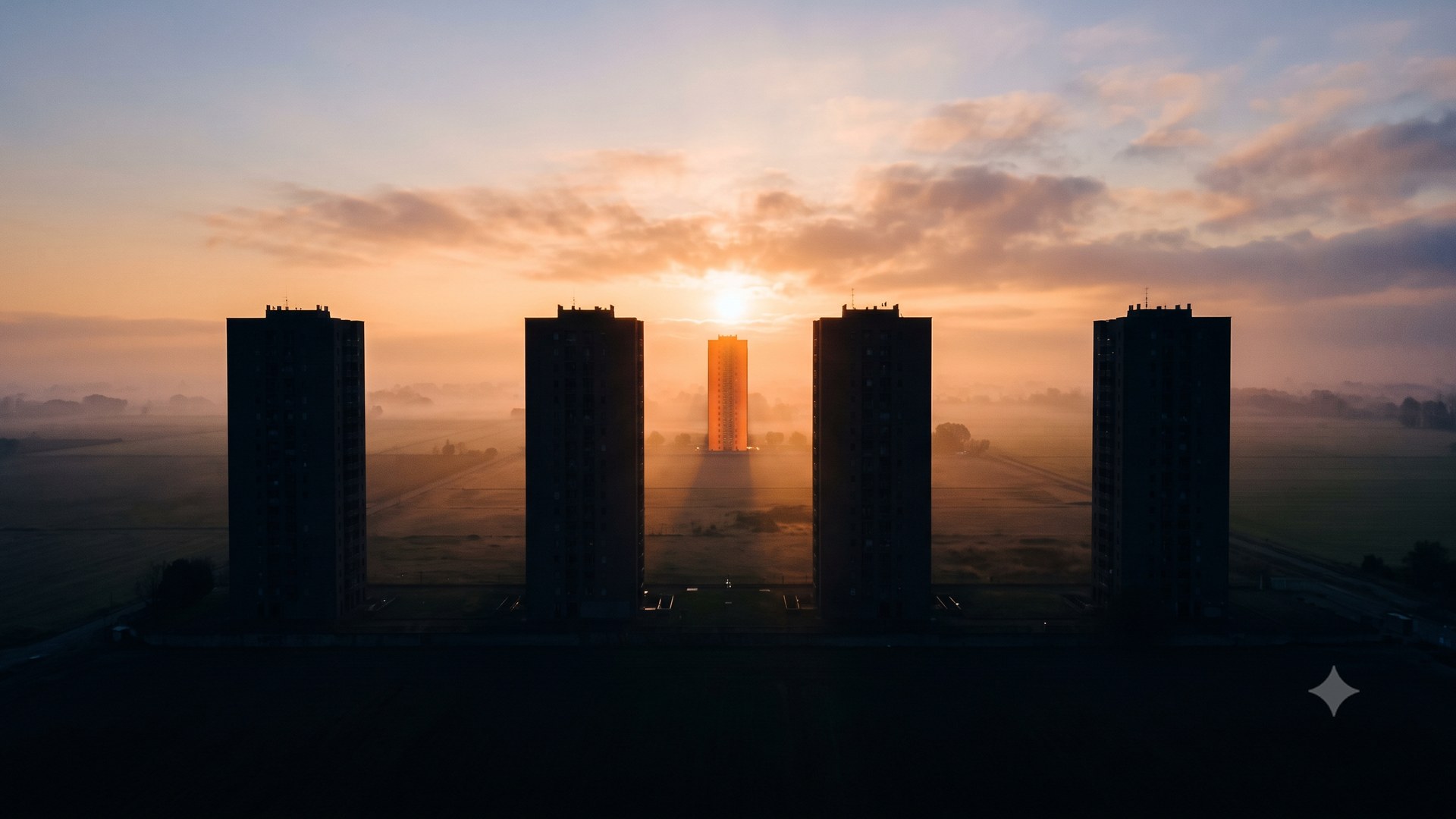
The four cities that ran out of room
For most of the internet's history, Europe's data lived in four places. Frankfurt, London, Amsterdam and Paris — FLAP, in the industry's fondness for acronyms — grew fat on being early. They had the fibre, the exchange points, the customers and the inertia. When you needed to put a server somewhere, you put it there, and everyone else did too.
The trouble with clustering is that it works until it doesn't. Those markets are now, in the words of one panellist, "quite a constraint on supply. Some bottlenecks, and quite packed." Power is rationed. Land is expensive. Grid queues stretch for years. A hyperscaler that wants a hundred megawatts near Amsterdam may simply be told no.
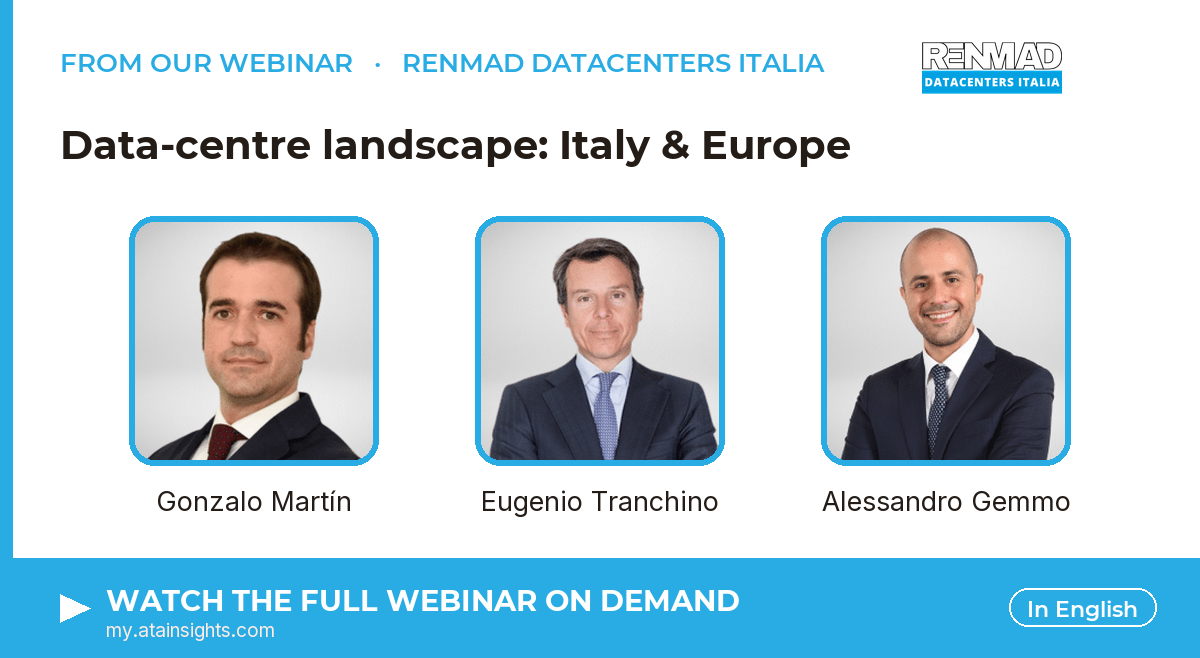
So the industry has started looking elsewhere, and one of the places it keeps landing is Italy — specifically Milan. That was the argument running through a recent ATA Insights webinar, "Analyzing the Data Center landscape in Italy and Europe," which brought together a market analyst and two lawyers to explain why the money is heading south and what it finds when it gets there.
Gonzalo Martín, who leads data centres and capital markets at Colliers, laid out the map. Europe now splits into three tiers: the saturated FLAP incumbents (he adds Dublin, making it a de facto five); a set of Tier 2 "expanding markets" where the greenfield action is; and a longer tail of emerging bets. Madrid and Milan sit firmly in that second group, with room to become "very big players."
"Italy is becoming a rising mechanism of Europe, no question about that," Martín said. "And not only Italy, but especially Milan. Milan is an emerging key strategic hub, for sure."
Why Milan, and why now
The case for Italy is partly geography and partly plumbing. The country sits at a crossroads for submarine cables, wiring Europe to Africa, Asia and the Americas. Construction costs run below the big northern markets. There is access to renewable power. And Milan carries a specific advantage that most challengers lack: it can host artificial-intelligence workloads where latency — the split-second delay that matters for, say, financial trades — is not the deciding factor.
That distinction is doing a lot of work. Training an AI model is not the same as serving it. Training can happen far from the user, wherever power is cheap and abundant; inference, the day-to-day answering of queries, wants to be close. Milan is winning both kinds, which puts it a step ahead of rivals such as Madrid, Warsaw or Marseille that mostly compete for the latency-sensitive share.
The numbers back the mood. Italy's installed capacity reached 513 megawatts last year, up almost 20% on the year before, with around 80 projects and new facilities in the pipeline. The usual hyperscalers — Microsoft, AWS — are building availability zones around Milan and, when asked, show no sign of leaving. Colocation heavyweights backed by Apollo, Brookfield, Blackstone and others have already planted flags. Once these commitments are announced, Martín noted, they tend to stick: "Once the investment is announced, it's very difficult to move it from one place to other."
The market, in short, is demand-led and energy-led, and everything else is detail. "This market is driven by demand and energy, and that's all it matters," Martín said, when pressed on whether this or that region might be the next hot spot. His answer to the perennial Madrid-versus-Milan question was cheerfully unhelpful and probably correct: both. Southern Europe is competing with the rest of the world, and every project announced in Madrid or Milan or Athens is, to his eye, good news for the neighbourhood.
The paperwork problem — and the fix that just arrived
Here is where the webinar, recorded before the decisive change, now reads as a forecast that came true.
For years, Italy's biggest obstacle was not power or capital but paperwork. A developer faced a bewildering split between national environmental rules and a patchwork of regional and municipal ones. Eugenio Tranchino, a partner at Watson Farley & Williams who has advised on a billion-dollar data-centre financing in Milan, described the terrain as a "bilateral scenario" — the state on one side, regions and towns on the other — with real ambiguity about who decides what.
Guidance existed. A 2024 ministry decree set out environmental thresholds; projects above 50 megawatts needed integrated authorization, and full impact assessments kicked in higher up. Lombardy issued its own site-selection rules. But guidance is not the same as a single clear process, and the fragmentation "highlights the need for national coordination," as Tranchino put it. A draft national law had been sitting in the Chamber of Deputies since June 2024, waiting.
"Italy will be adopting its own law quite soon," Tranchino predicted during the session, "which will probably boost the development of those projects."
It did. In February 2026, Italy's government adopted a decree — since working its way through parliamentary conversion — that finally does what the panel was hoping for. It creates a single national authorization procedure for building and expanding data centres, folding the environmental, grid-connection and related permits into one process with one point of contact. Facilities above 50 megawatts of thermal capacity are handled at regional level; the largest, above 300 megawatts, go to the environment ministry. Crucially, it caps the whole thing: ten months, extendable by three, and it halves the timelines for environmental impact assessments.
That matters because the old timelines were the bottleneck. Tranchino, asked during the webinar how long approvals took, was blunt: the environmental impact process was supposed to finish within 130 days by law, "but this term is never met." His real-world estimate was six months to a year, with the building licence ideally running in parallel rather than waiting behind it. The whole point of the new procedure is to make that parallel track the rule rather than the hope.
For anyone weighing an Italian project, the shift is the difference between an open-ended gamble on the bureaucracy and a process with a legal clock on it. The webinar captured the moment just before the clock was installed.
Power is the whole game
Permits get you the right to build. Power decides whether you should.
Alessandro Gemmo, a managing associate at Linklaters in Italy, walked through the part that keeps developers awake. A data centre is an energy-intensive, always-on load — it cannot flex its consumption the way a factory can — and it needs a stable, reliable connection to the grid, which in Italy means dealing early with Terna, the national transmission operator.
His single most practical piece of advice was to talk to the grid before filing anything. "The necessity to engage directly with the grid operators in advance, before the request," he said, is what lets a developer find the best connection point, shorten the timeline and hold down the cost. Skip that conversation around Milan — where the grid is, in his word, "saturated," and where virtual saturation from a flood of connection requests is now a live worry — and a project can stall for years. In practice, he said, each data centre there ends up needing its own dedicated substation.
Then there is the price of the electrons. Italy's power is dear by European standards, which pushes developers toward power-purchase agreements, on-site generation and, increasingly, projects placed near cheap renewable supply in the south of the country. Get the energy right and the economics cascade: a developer passes cheaper power through to the tenant, and cheaper power wins deals. "If power is cheaper on your facility, that's gonna drive a lot of investment decisions," Martín observed.
Gemmo's counsel throughout was to treat power sourcing as something to engineer deliberately — PPAs, batteries, on-site generation, all coordinated with the build rather than bolted on. And he flagged the direction of travel on the law itself, warning that "there are several changing legislation that is expected to be adopted in the coming months." That, too, has now come to pass.
The map is being redrawn
The through-line of the session was that the old European hierarchy is not permanent. FLAP was a product of who arrived first, not of any law of nature. Power, land and — belatedly — a workable permitting regime can move the centre of gravity, and in Italy's case they are moving it toward Milan and, increasingly, toward the sunnier, power-rich south where the electrons are cheap even if the demand is up north.
None of this makes Italy easy. The grid is tight, the power is pricey, and even a streamlined permit is still a permit. But the panel's collective verdict was that the hard part — regulatory uncertainty — was the part most likely to get better, and it now has. The rest is the ordinary work of matching demand, energy and a business plan, which is a problem developers know how to solve.
Martín, asked to bet on Madrid or Milan, refused to choose and bet on both. On the evidence, that looks less like diplomacy than arithmetic. Europe needs far more capacity than its four crowded capitals can hold, and the countries with room and a plan will take the overflow. Italy has just given itself a plan.
Watch the full webinar on demand for the panel's answers on off-grid projects, PPAs, storage and where the returns really sit in the value chain. And if you want the conversation in person, RENMAD is running its data-centre event in Milan on 19–20 November — the room where a lot of these projects get built.
You reached this analysis because ATA Insights puts independent energy-transition intelligence in front of 86,000+ professionals across the sector. That's exactly what we do for funded projects, events and companies — turn your work into reach.
See how we disseminate work like this →Where this analysis came from
This piece draws on the ATA Insights / RENMAD webinar Data-centre landscape: Italy & Europe. Watch the full session on demand.
The energy transition, in your inbox
Join 86,000+ professionals reading our independent briefings across five sectors.